
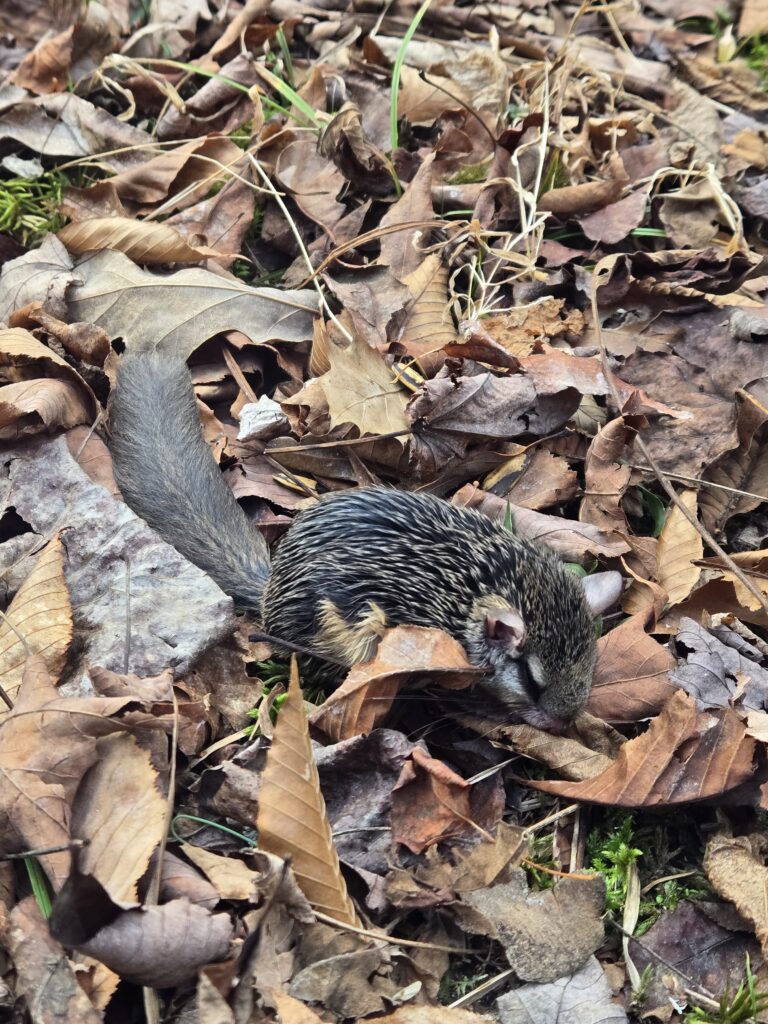
What a flying squirrel taught me about power, responsibility, and mercy
I have been using a live trap to catch a family of flying squirrels that have taken up residence in a wall cavity of a small secondary cabin on my property. This endeavor has been somewhat successful—but not in the way I’d hoped.
You see, I bought and used several live traps thinking I could catch them one by one, take them a few miles down the road, and release them back into nature. Being the gentle animal lover that I am, I figured relocation was the best option.
This is where the story begins to get a little sad.
The first few squirrels I trapped were dead when I arrived to check the traps the next morning. Because this tiny house is not inhabited by humans, it is not heated, and it was wintertime with temperatures hovering around freezing on those nights, I figured they had frozen to death. I was upset, knowing that my trap had caused a tiny animal an early death—and most likely not a quick one. I vowed not to reset the trap until the weather warmed.
In the meantime, I decided I would seal all entry and exit holes I could find, leaving one hole open so if any were trapped inside they wouldn’t chew a new one. This way, they could leave on their own, and once they were all gone, I would seal the final hole.
I ordered some leg levelers for my ladder due to the uneven terrain surrounding the cabin. I planned to tackle the sealing as soon as the levelers arrived in the mail.
While waiting for the levelers, the weather shifted from the normal cold, rainy, snowy winter to an unreasonably warm 50 degrees. I reset the trap, excited to finally catch one of these guys alive.
The squirrels are nocturnal, so I set the trap just before sundown and came back the next morning. I had one—and it was alive—but my heart sank when I saw that he was barely moving in the trap. Something wasn’t right.
I called my fiancée, who was in our main cabin elsewhere on the property. I told her to grab a little dish of water and meet me. We needed to release this critter soon.
We drove a few miles down the road and pulled into a secluded wooded area right by a creek—the perfect spot. I opened the door to the trap, but he didn’t run out. Eventually, I got him out, and he just sat there on the ground, barely moving. We placed some sunflower seeds beside him and made sure he had water, trying to signal that it was okay.
He was breathing, but he kept burying his head in the leaves. We figured he might just be exhausted from trying to escape the trap all night and needed rest. So we left him alone to recover.
When we got home, I googled it and learned something that really upset me. Flying squirrels are not like other mammals. Their whole lives are spent “escaping”—hence the reason they “fly.” When a flying squirrel senses it is trapped, it may enter a shutdown response, preparing to die. This is what I was witnessing, and it likely explains why none of them had survived in the past. It’s a stress response.
That realization absolutely destroyed me. I felt terrible. How could I do such a thing to such an amazing creature? Obviously, this was never my intent.
Being so distraught, I woke up several times over the next few nights, and my first thought was always: Why does this squirrel’s death bother me so much? After all, it’s just a rodent. There are several of them destroying the insulation in my cabin, peeing and pooping everywhere, making an absolute mess—ultimately taking a lot of my time and resources. Shouldn’t I be pleased I eliminated one? Or at the very least, not be upset? I am far more powerful than a tiny squirrel—shouldn’t I be okay exercising that power to protect my own property?
But I don’t think so.
After many sleepless hours of contemplation, I realized that although this little creature caused damage, he and I share a lot in common. We both want warmth from the cold. We both want food and water. We both enjoy the company of friends. We aren’t that different, the squirrels and I.
On a deeper level, we share the same consciousness—the same life-force energy that keeps us going each day—and we share the same God. I recognize myself in that squirrel, and that is why it hurts so much to witness its suffering.
Furthermore, because I am so powerful in relation to this tiny animal, I should use that power to protect the less powerful. In this instance, that means protecting the squirrels, which was my intention from the get go. Therein lies the beauty of this story: the pest of a squirrel helped me remember a lesson in love, compassion, and humility. So who really is more powerful?
Moving forward, I am not trapping any more. I am using a one-way exclusion door on their entry/exit holes so they can leave but not get back in. I am grateful for all that I have learned during this whole squirrel saga, and I am sorry it took several losses to figure out what was happening.